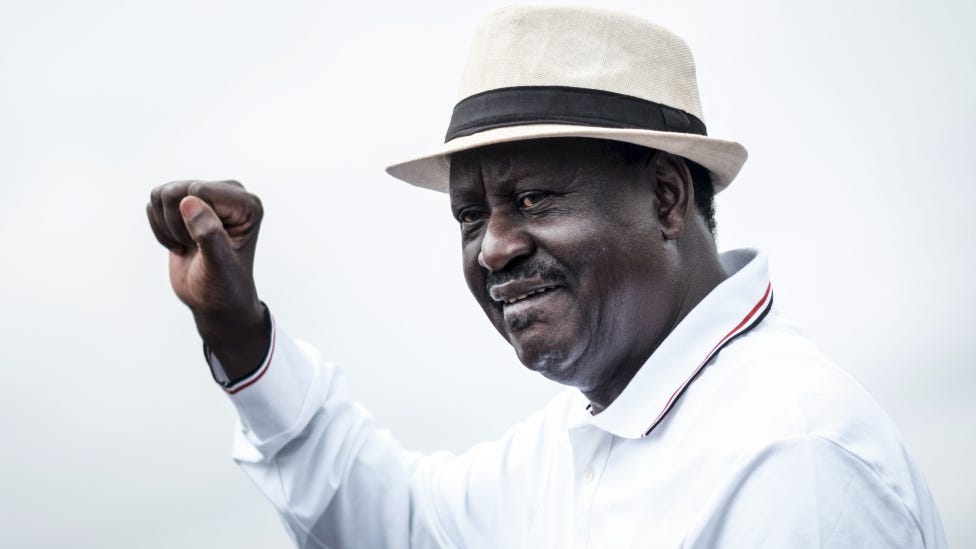
Kenya mourns its most enduring opposition leader as questions loom over the country’s political future
NAIROBI – Decades of perseverance, years in the political hurdle and quagmire, and following the footsteps of his father, Jaramogi Oginga Odinga the first vice president of independent Kenya shaped the life of Raila Amolo Odinga.
Known fondly by Kenyans as Baba, Raila was a prominent figure not only in Kenya but across Africa’s political arena. A man who deeply admired the late Cuban revolutionary Fidel Alejandro Castro Ruz, Raila later named his firstborn son after him. Those who knew him say he was humble in his personal life and a kind neighbor, as confirmed by residents who shared his neighborhood.
A man who rose from the ashes like a phoenix, Raila was a politician engraved in the hearts of the people and in the political life of Kenya. Despite his decades of political involvement, which never brought him the presidency, he ran for leadership five times none successful. Yet he played a decisive role in introducing Africa’s first “power-sharing” arrangement after the disputed 2008 election, remembered by Kenyans as the handshake, which helped end the tragic post-election violence.
“We lost a giant who was larger than life, and a man trusted by many Kenyans. His death came as a great shock. Just a few days before his sudden death, someone I know spoke with Odinga he was healthy and energetic. A colleague of mine, who served as his assistant, was devastated. One minute he was fine, the next he was gone,” a Journalist and Vice President of Freedom Speak International, Wanja Gathu told Horn Frequency in a saddened voice.
Odinga’s death brought mixed emotions throughout the nation. Some remain in disbelief, while others are worried about the future of the country. For many, Raila was among the very few figures who could hold Kenya’s fragile political balance, often more effectively than the incumbent leadership.

What Will Kenya’s Political Situation Look Like?
Kenya has endured many political storms, and the ongoing turmoil led by the youth against President Ruto’s government remains unresolved a ticking time bomb. During the 2024–25 unrest, Odinga’s role in calming tensions was immeasurable.
“Before 2024, we all knew the country was not heading in the right direction. At the same time, we were hoping that Raila would step up, and we believed he could prevent things from getting out of control,” Wanja recalls.
After the killing of hundreds of youth protesters, Raila entered into negotiations with the Ruto administration, allowing his party, the Orange Democratic Movement (ODM) to gain positions within the government. However, this move cost him significant grassroots support. Many young people felt betrayed, saying, “Baba should have stood with us, not sided with the adversary government.”
His passing leaves Kenya at a political crossroads. “When Raila sneezes, the country must pay attention,” Wanja stresses. His mysterious departure has shaken Kenya’s political space in an unprecedented way.

The Legacy
Over forty years of bold and active political engagement earned Raila Odinga a prominent status and massive public respect achievements not easily won. Though admired by millions, his repeated attempts to ascend to power never succeeded. He ran in five general elections but never won the presidency.
In 1982, Raila’s unsuccessful coup attempt against President Daniel arap Moi became one of the most defining knots in his political journey. Critics also argue that Baba failed to groom a successor, leaving ODM vulnerable to internal divisions. The party’s recent ambiguous relationship with the incumbent government has raised doubts among supporters. Once a true symbol of opposition, ODM’s softened stance toward a government many view as incompetent has tarnished its image.
At this moment, it is difficult to see light at the end of Kenya’s political tunnel. The nation’s most seasoned statesman, a lifelong voice of the people and a true patriot Raila Amolo Odinga is gone, leaving behind a fragile and uncertain political landscape.